
Grading Gravel Driveways Before Winter Rains
As the dry, dusty days of late summer give way to the familiar overcast skies of the PNW, homeowners in Maple Valley know it is time to prepare their properties for the wet season. We often think about cleaning gutters and winterizing sprinkler systems, but one of the most critical tasks on the fall to-do list is frequently overlooked: repairing rutted gravel driveways before winter sets in.
Your driveway is the gateway to your home. It endures the daily wear and tear of family vehicles, delivery trucks, and changing weather. When left unmaintained, a gravel driveway can quickly deteriorate from a smooth, welcoming entrance into a jarring, muddy obstacle course. Taking the time to properly grade and prep your driveway now, before the heavy rains saturate the soil, is one of the smartest investments you can make in your property's accessibility and longevity.
Why Winter Weather is Tough on Gravel Surfaces
Water is the natural enemy of any unpaved surface. During the warmer months, the structural integrity of your driveway might seem perfectly fine. But once the relentless winter drizzle begins, minor imperfections can quickly turn into major headaches.
When water pools on the surface of your driveway instead of flowing away from it, it softens the underlying base material. As vehicle tires pass through these wet spots, they push the water down into the base and force fine materials to the surface, creating potholes. With every passing car, these potholes grow wider and deeper. Furthermore, water running down the length of the driveway can carve out deep ruts and washouts, washing your expensive gravel away into the nearest ditch.
Many homeowners attempt quick fixes by simply dumping new gravel into existing potholes. However, without addressing the underlying shape and drainage of the driveway, the new gravel will simply wash away during the next heavy storm, leading to a cycle of constant, frustrating repairs. Fixing the root cause now saves you from having to look into emergency landscaping or major structural rebuilding when the ground is frozen or completely waterlogged.
The Mechanics of Crowning and Grading Gravel Driveways
If simply filling potholes doesn't work, how to fix gravel driveway drainage issues effectively? The secret lies in the geometry of the road surface. A properly constructed gravel driveway should never be perfectly flat. Instead, it requires a specific profile known as a "crown."
Crowning and grading gravel driveways involves shaping the surface so that the center is slightly higher than the edges. This subtle peak allows rainwater to shed off to the sides rather than pooling in the middle or running down the tracks left by vehicle tires.
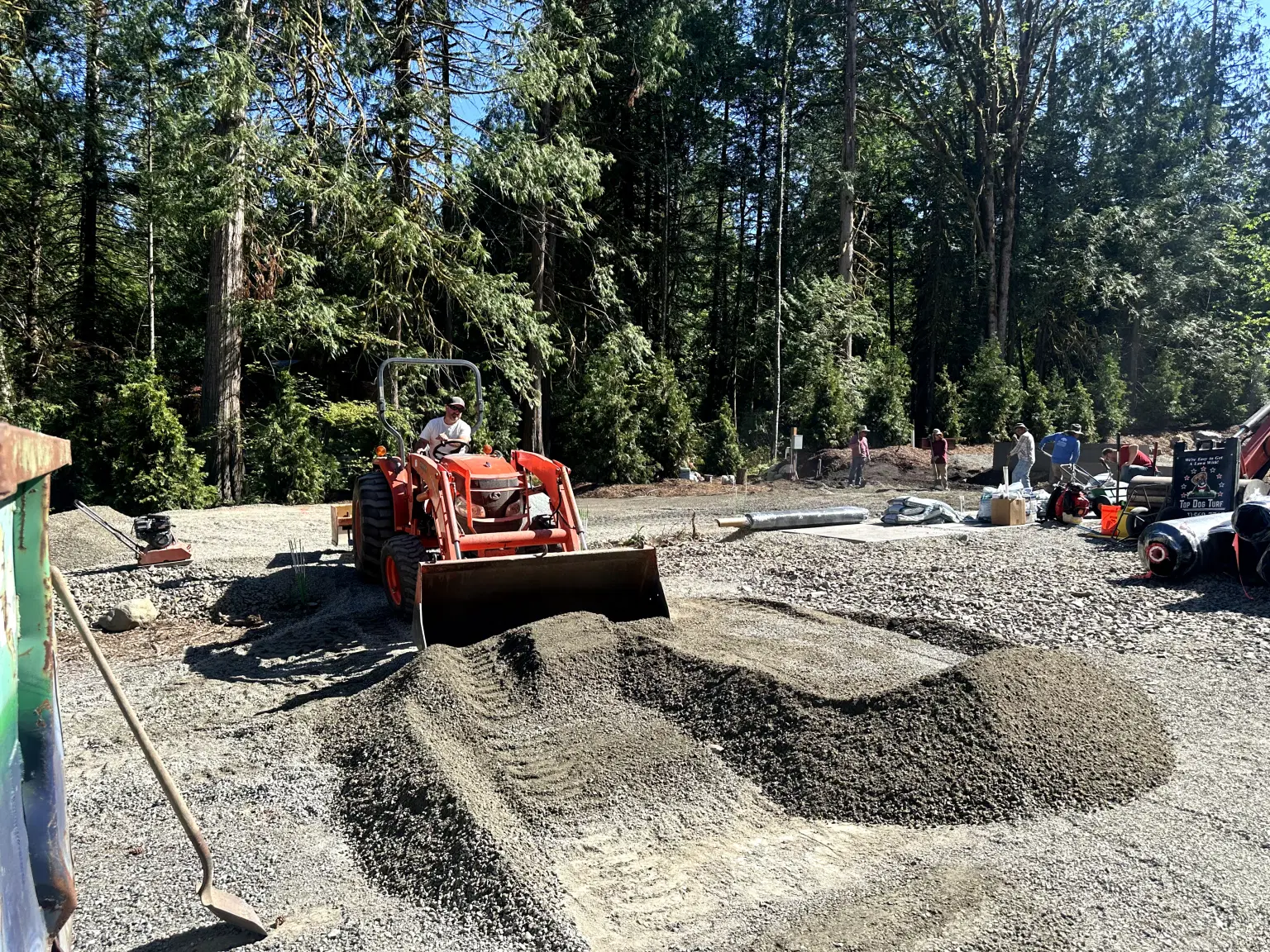
Achieving this precise shape requires professional land grading. The process begins by using heavy machinery to rip up the existing surface, cutting down to the depth of the lowest pothole. This step is crucial because it blends the old, compacted gravel with the new material, ensuring that the newly graded surface bonds together uniformly. If you just spread new gravel over an un-scarified surface, the layers won't lock together, and the potholes will quickly return.
At Saylor Landscaping, our professional tractor work ensures that your driveway's base is properly agitated, reshaped, and compacted. We utilize specialized grading implements to pull material from the edges back toward the center, re-establishing that essential crown so your driveway can shed water efficiently throughout the wet season.
Addressing Drainage and Understanding the Investment
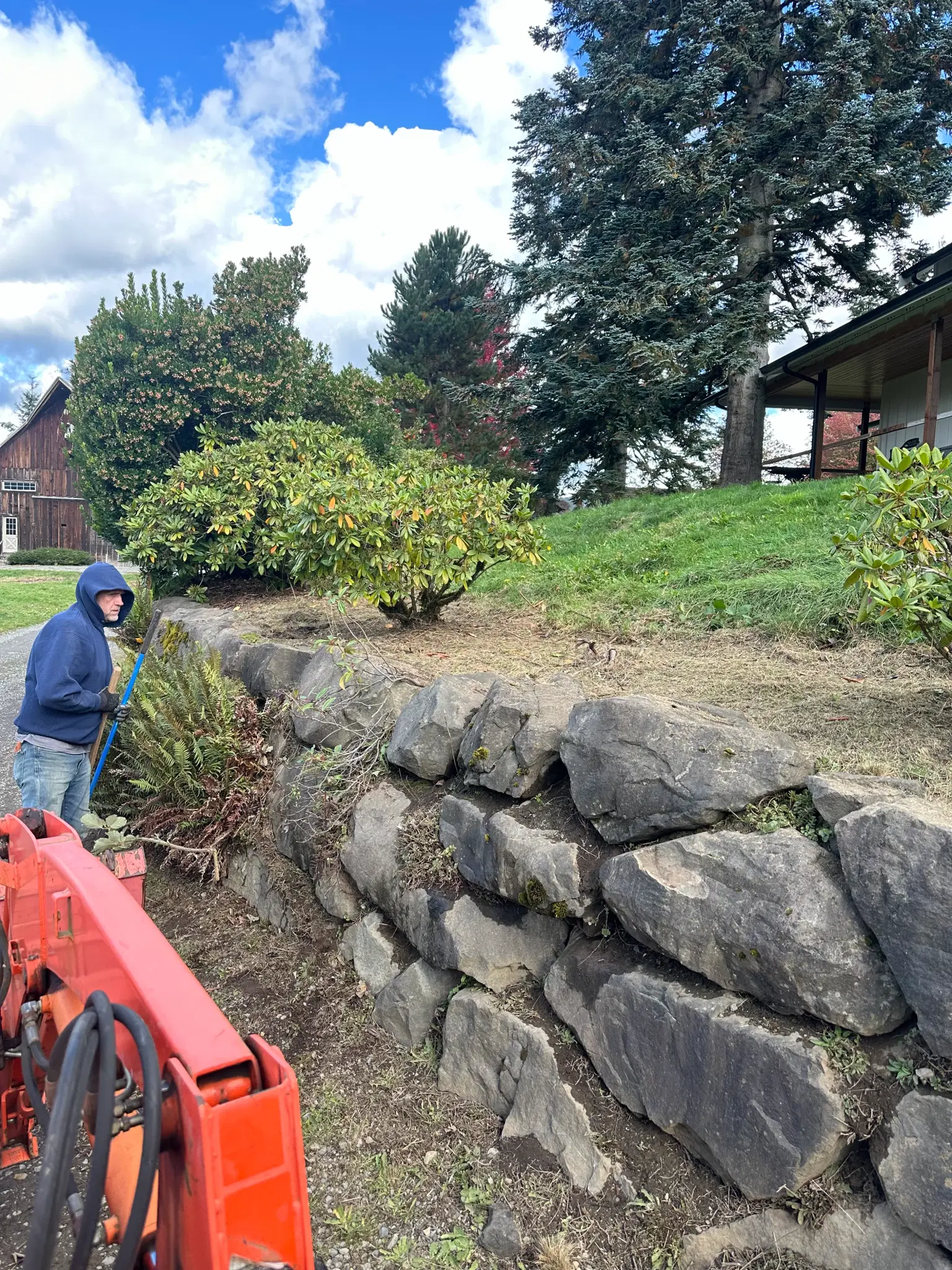
Clients often ask us about the difference between landscaping and hardscaping. While landscaping traditionally focuses on the living, horticultural elements of your property—like plants, lawns, and garden beds—hardscaping encompasses the structural, non-living features. Your gravel driveway is a primary piece of hardscaping, and just like a retaining wall or a patio, it requires a solid foundation and proper water management to survive.
Even with a perfect crown, water needs a place to go once it rolls off your driveway. If the edges of your driveway are blocked by overgrown turf, accumulated debris, or packed soil, the water will be trapped, eventually seeping back under the gravel and destroying the base. Integrating comprehensive drainage repair alongside your grading project—such as clearing adjacent swales, installing French drains, or adjusting the slope of the bordering land—guarantees that water is directed safely away from your home and hardscaping.
Another question we hear frequently is: how much does professional landscaping cost when it comes to site prep and grading? The answer always depends on the length of the driveway, the severity of the damage, and the cost of any new materials required. However, investing in preventative grading in the autumn is vastly more cost-effective than waiting for the driveway base to fail entirely. Routine maintenance grading protects your initial investment, extends the lifespan of the gravel, and saves you money in the long run by preventing severe washouts that require total reconstruction.
Don't Wait for the Washout
As the familiar rain returns to our region, a well-maintained gravel driveway will give you peace of mind, safe access to your home, and protect your vehicle's suspension from punishing potholes. Proper grading isn't just about making things look tidy; it's about engineering a surface that can stand up to the elements.
If your driveway is already showing signs of wear, or if you struggled with standing water last winter, now is the time to act. Let our experienced team assess your property, establish a proper crown, and resolve any underlying drainage issues before the weather turns severe.
Serving communities all across the Eastside, Saylor Landscaping is ready to help you prepare your property for whatever the season brings. Contact us today to schedule a consultation and ensure your driveway is ready for the winter rains.