Defending Your Yard: Preventing Retaining Wall Failure from Water Pressure
If you live in the Pacific Northwest, you know that our prolonged rainy season from late fall to early spring dictates a lot of what we can and cannot do with our outdoor spaces. Whether you live on a steep slope overlooking The Sound or in a quiet neighborhood with a sloping backyard, managing water is a constant reality. For homeowners with tiered gardens, elevated patios, or leveled lawns, retaining walls are absolutely essential structures. But there is an invisible, relentless force that threatens these beautiful installations every time it rains: hydrostatic pressure.
At Saylor Landscaping, we have spent over two decades helping homeowners protect their property investments by designing, building, and maintaining hardscapes that actually stand up to our unique local climate. Building on steep hills and dealing with severe seasonal fluctuations requires more than just stacking stones; it requires a deep understanding of earthwork and water management. Let us look at how water pressure affects your landscape, how to spot the early warning signs of trouble, and what you can do to prevent costly, catastrophic wall failures.
The Unseen Enemy: Understanding Hydrostatic Pressure
When heavy rain saturates the soil behind a retaining wall, all of that water has to go somewhere. If the soil is dense—like the heavily compacted, clay-rich dirt found in many of our local microclimates—it holds onto that moisture tightly. The soil expands and becomes incredibly heavy. This buildup of trapped water creates what engineers call hydrostatic pressure.
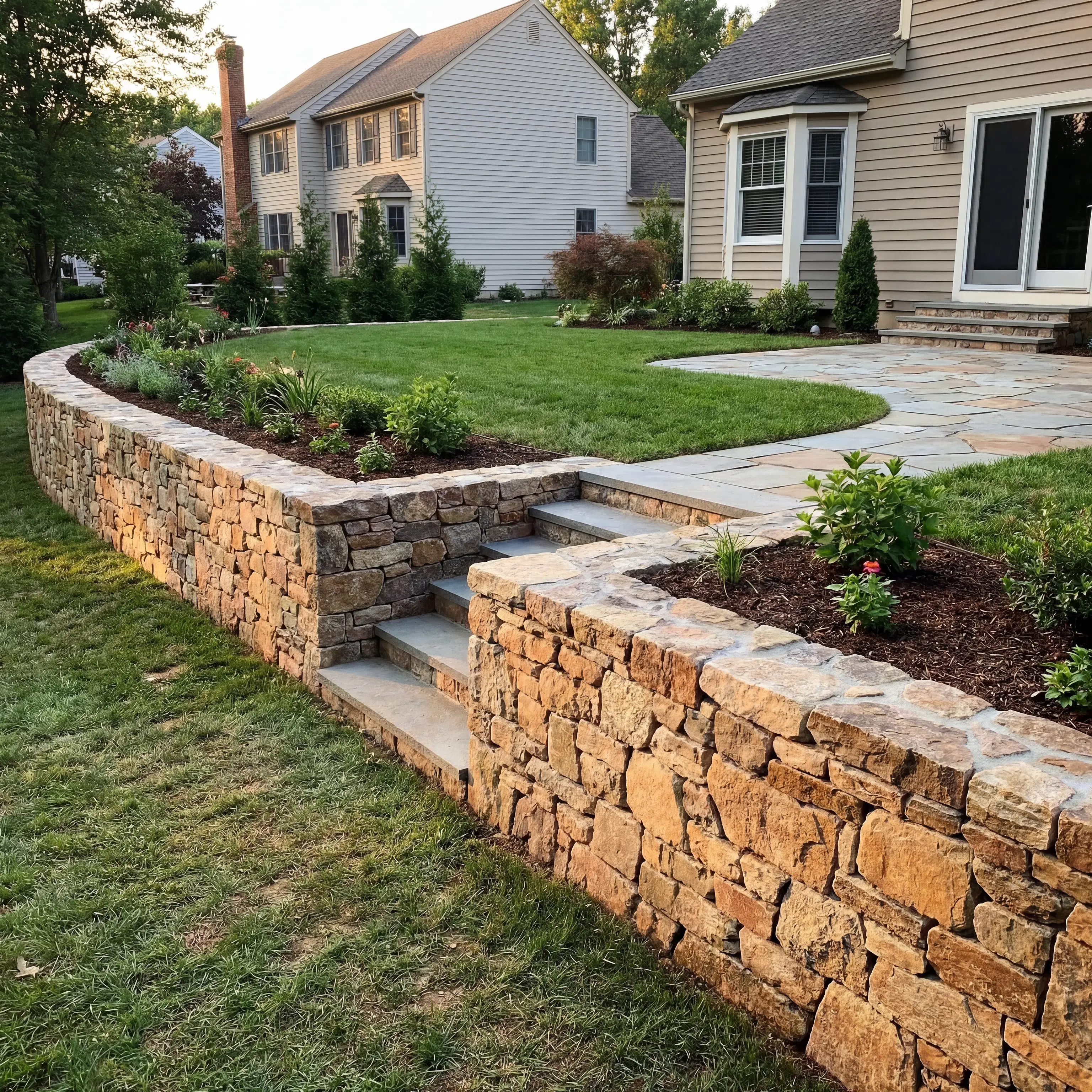
Hydrostatic pressure is the immense force exerted by a fluid due to gravity. In the context of your yard, it translates to thousands of pounds of lateral force pushing directly against the back of your wall. Even the most expertly laid stone, block, or timber cannot withstand this outward pressure indefinitely if the water has no route to escape.
Without proper mitigation, this force will inevitably look for the path of least resistance. Usually, that means pushing the retaining structure outward. Over time, the structural integrity of the wall becomes entirely compromised, leading to shifting, buckling, or a total collapse. Building a successful wall is essentially an exercise in earth and water management. That is why professional site preparation, accurate land grading, and integrated drainage systems are just as important as the visible stones you see on the surface. If the unseen foundation and drainage are neglected, the beautiful facade will not last.
Identifying the Signs of Retaining Wall Drainage Failure
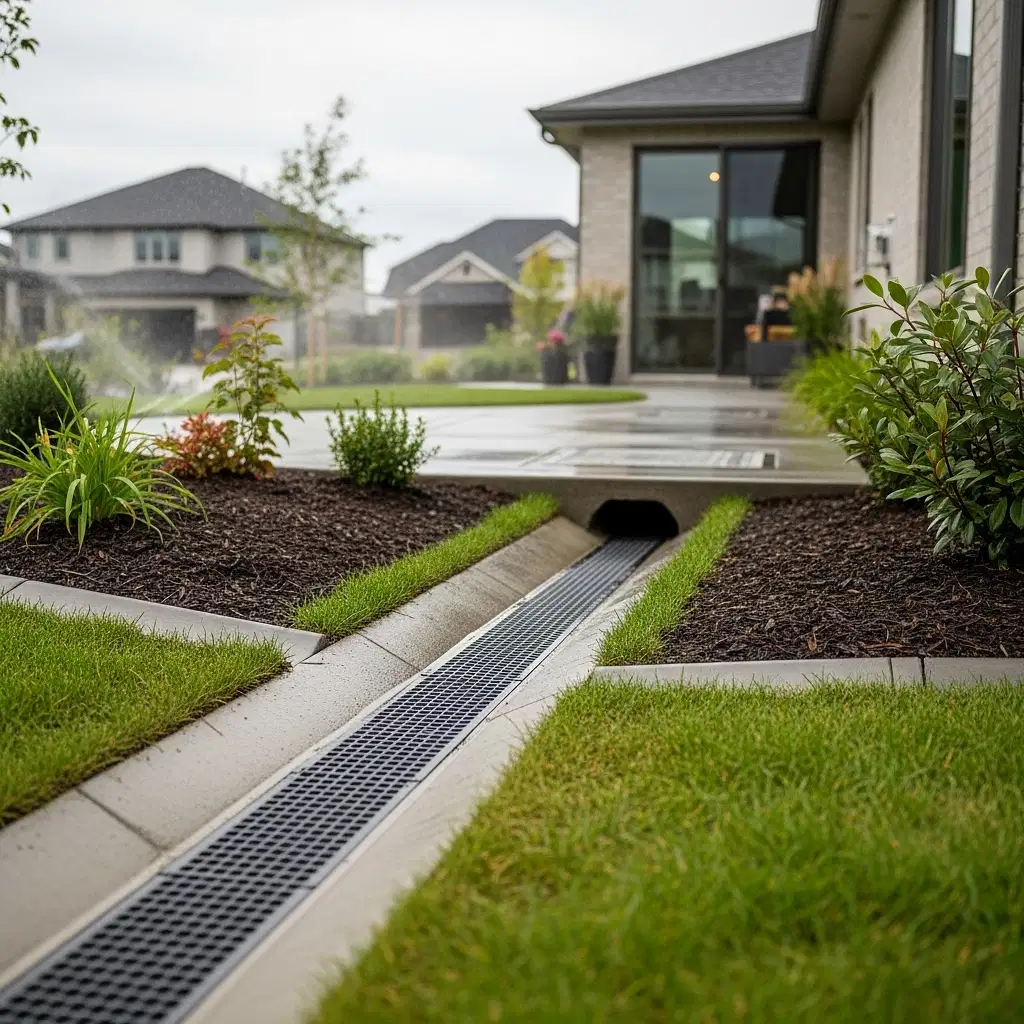
Catching a drainage problem early can often mean the difference between a simple, targeted repair and the need for a complete, expensive rebuild. Because water damage primarily happens below the surface, the early warning indicators can sometimes be subtle and easy to overlook. Here are a few key indicators that you might be dealing with signs of retaining wall drainage failure:
- Bowing or Bulging: If a once-straight wall is starting to lean forward or develop a belly in the middle, water pressure is actively pushing it out of place.
- Cracking: Small hairline cracks in concrete, masonry, or mortar joints can quickly expand as water seeps in, freezes, and thaws during colder weather.
- Soggy Soil: A persistently soggy lawn directly above or below the structure indicates that water is pooling heavily rather than draining away safely.
- Erosion and Washout: If you notice soil washing out over the top of the wall or muddy water seeping through the crevices between stones, the internal drainage system is likely overwhelmed, clogged, or non-existent.
If you notice any of these issues developing on your property, it is time to look into professional drainage repair. Addressing standing water and drainage issues promptly not only saves your hardscaping but also protects your property's overall foundation from the heavy, sustained rains typical of our region.
Effective Retaining Wall Hydrostatic Pressure Solutions
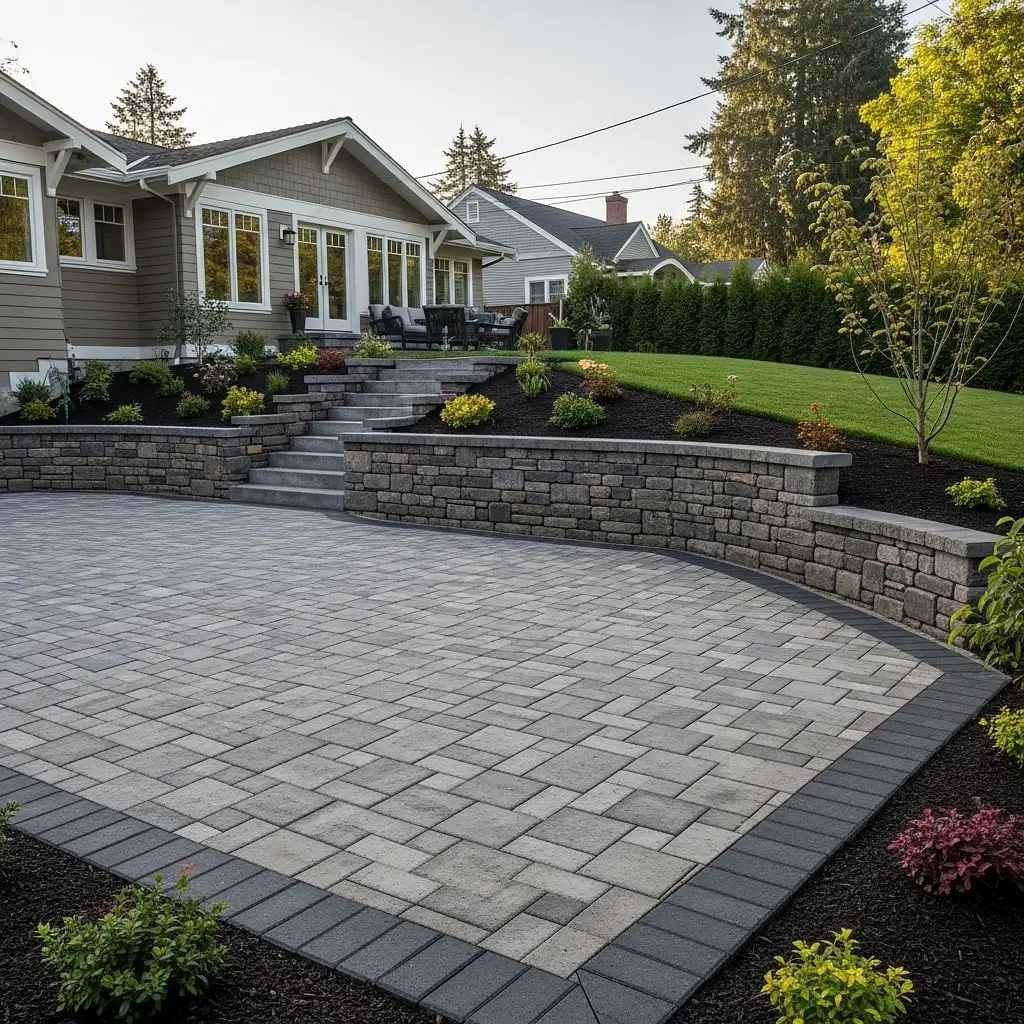
The secret to a long-lasting retaining wall isn't just about how heavy or thick the stones are; it is entirely about how well the entire system handles water flow. When we design and build outdoor structures, we implement multiple layers of defense to provide reliable retaining wall hydrostatic pressure solutions.
First, we use proper backfill materials. Instead of pushing the native, water-retentive soil right back against the back of the newly built structure, we install a generous, vertical layer of crushed gravel. This creates a highly porous zone where water can quickly drop downward rather than pushing laterally against the stones.
Second, we install a perforated drainage pipe—commonly referred to as a French drain—at the very base of the gravel trench. This pipe collects the water that drops through the gravel and carries it safely away from the structure, usually releasing it into a designated rain garden, drainage swale, or a municipal storm sewer system.
Third, we often incorporate weep holes. These are small, intentional openings placed along the bottom face of the wall. They give trapped water an immediate, fail-safe escape route if the primary drainage pipe ever becomes clogged or overwhelmed during an unusually heavy winter storm.
For older walls that are already failing or leaning dangerously, drainage & erosion damage repair is critical. We can often carefully excavate the soil behind the leaning section, relieve the built-up pressure, begin repairing severe erosion behind retaining walls, and install an updated, modern drainage system before restoring the structure to its original beauty and strength.
Partner with Trusted Hardscaping Professionals
Navigating the steep hills, prolonged wet seasons, and complex local environmental regulations of our region requires a specific level of expertise. You need a team that understands the local climate inside and out, and has the heavy equipment and experience to manage complex excavation, tight quarter land clearing, and precise grading tasks properly.
At Saylor Landscaping, we have over 20 years of hands-on experience specializing in excavation, land grading, and durable hardscape construction. We believe in complete honesty and transparency when it comes to budgeting and project timelines, ensuring you get a realistic estimate and reliable service from start to finish. Our ultimate goal is to provide tailored, sensible options that fit your specific needs, protecting your property's integrity while enhancing its natural beauty.
If you have concerns about an existing structure that seems to be struggling with water pressure, or if you want to ensure your next outdoor project is built to last through decades of harsh weather, reach out to us. Visit our contact us page to schedule an honest consultation, and let our experienced crew help you defend your yard against the elements.